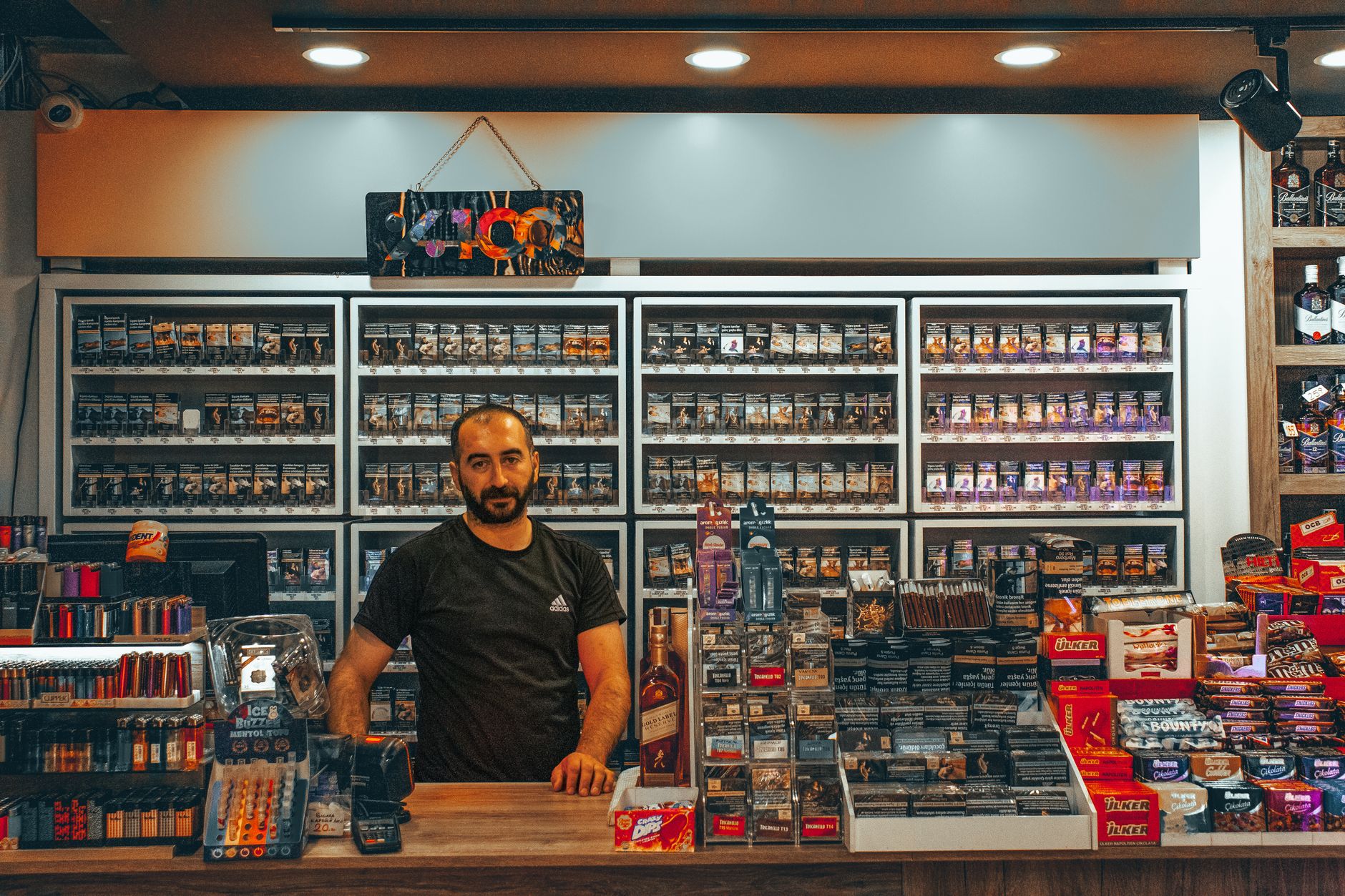
Designing an adult-only retail display for nicotine pouches means creating a merchandising system that restricts access to legal-age adults, communicates product information accurately, and respects the regulated nature of the category. The display must be physically or procedurally separated from general merchandise, positioned so staff can monitor it, and supported by clear signage and training. This approach protects your business, helps maintain adult-only retailing standards, and supports responsible retail practices.
The key is to think of the display not as a shelf unit but as a controlled zone within your store. A well-designed adult-only display is one that can be clearly identified by staff and adult customers, kept out of reach of minors, and organized so that product information is accurate and easy to evaluate. This article explains the core decisions you’ll need to make—placement, physical barriers, signage, staff training, and catalogue organization—and offers a simple framework for getting it right.
Key Takeaways
- An adult-only display is a controlled zone that physically or procedurally limits access to legal-age adults; it relies on placement, barriers, signage, and staff vigilance.
- Place the display near staffed checkouts or behind counters to enable monitoring, and avoid low, open shelves that invite self-service by minors.
- Use clear age-restriction signage and maintain accurate product information on every facing to support adult customers and responsible retailing.
- Train staff to understand the adult-only policy, verify age at point of sale, and recognize when a display needs adjustment.
- Organize the display by brand and product line so that adult trade customers can evaluate the range quickly; consistent signage reinforces the adult-only message.
What Does “Adult-Only Display” Mean for Nicotine Pouches?
An adult-only display is a merchandising arrangement designed to prevent minors from accessing nicotine products. Unlike a general shelf, an adult-only display typically relies on a combination of physical barriers (locked cases, behind-counter storage, or high shelving) and procedural controls (staff assistance, age verification). The goal is not to make products invisible but to make the purchase process deliberate and supervised.
In a B2B wholesale context, the same principles apply to showroom or retail environments where nicotine pouches are sold to end consumers. The official ngpeurope.eu portal itself uses an 18+ age gate, a digital example of access restriction. A physical display should mirror that intent: only adults should be able to browse and buy.
This is different from “age-restricted” signage alone. A sign saying “18+” is not a sufficient control if the product is on an open shelf at child eye level. The display’s design must work with store operations—staff location, sightlines, and checkout flow—to reduce the risk of underage access.
Why Is Display Design Important for Adult-Only Retailing?
Display design is a practical tool for responsible retailing, not a marketing afterthought. A well-designed display reduces the chance of accidental sales to minors, helps staff enforce age policies, and signals to adult customers that the retailer takes the category seriously.
Accurate display also supports wholesale buyers. When a retailer organises a nicotine pouch display, they are essentially creating a mini-catalogue. The ngpeurope.eu portal provides individual product pages with details such as manufacturer, origin, ingredients, net weight, flavour, and nicotine values. Retailers can use the same structured information on shelf labels or digital displays. This helps adult customers compare products without needing to ask staff for every specification, and it supports the retailer’s own inventory accuracy.
Display design matters because it connects the physical store to the regulatory and commercial environment. A display that is hard to navigate or poorly labelled creates friction for adult customers and extra work for staff. A display that is clearly adult-only and well-organised reinforces professionalism.
Where Should You Place a Nicotine Pouch Display?
Placement is the first and most important decision. The display should be located where staff can see it and, ideally, where customers cannot access it without assistance. Common options include:
- Behind the counter—the most restrictive option; customers must ask staff, which creates a natural age-verification point.
- Near the checkout—visible to staff, but still requires a barrier if customers can reach it. A gated shelf with a “please ask” sign works.
- High shelving—out of reach of children, but still accessible to adults. This works only if the shelf is above 1.5 meters and not easily climbed.
Avoid placing the display near children’s products, at floor level, or in low-traffic areas where staff supervision is thin. The location should also consider adult customer convenience: it should be easy for adults to browse without feeling they are in a restricted zone, but clear that assistance is needed.
A practical rule: for a self-service model, the display must be physically impossible for a child to reach; for a staff-assisted model, it must be within the cashier’s direct line of sight. Either way, the display should be positioned so that every transaction can be observed.
What Physical Barriers Support an Adult-Only Display?
Physical barriers are the structural elements that prevent self-service by minors. They range from simple to sophisticated:
- Locked display cases—most common for high-value or highly regulated products. Glass-front cases allow visual inspection but require staff to unlock the case.
- Gated or hinged shelving—a shelf with a clear acrylic gate that the customer can open, but that still requires a deliberate action. This deters casual access.
- Counter-top units—small acrylic or metal stands that sit on the counter, directly under staff control.
- Bins or flat shelves—these work only if placed behind the counter or on a high wall shelf.
The choice depends on the store layout, the product range, and the level of staff supervision. A busy convenience store might need locked cases; a specialist tobacconist with a counter might use open shelving behind the till. The display should also be designed to avoid creating a “hidden” storage area that becomes messy or unmanageable—clutter undermines the adult-only message.
For a B2B wholesaler, the physical display in a showroom might also serve a dual purpose: it demonstrates the product range to trade buyers while serving retail customers. In that case, the display should be clearly partitioned from customer browsing areas, or staff should accompany trade visitors.
How Should You Use Signage on an Adult-Only Display?
Signage serves two functions: age-restriction communication and product information. Both are essential.
At the top or front of every display, place a clear age-restriction sign, such as “18+ Only” or “Age Restricted—ID Required.” This signals to minors that the product is not for them and reminds adult customers of the store’s policy. It also protects the retailer by documenting the intent of the display.
Product-facing signage should mirror the accuracy of the ngpeurope.eu product pages. On the portal, each product page lists the product name, category, manufacturer, country of origin, ingredients, net weight, flavour, and nicotine values. On the shelf, you can provide the same details on small labels or on a digital screen. This is especially useful for adult customers who want to compare flavours or strengths without handling every can.
A key distinction: age-restriction signage is mandatory for access control, while product information signage is a merchandising opportunity. Both need to be consistent and accurate. Never copy a nicotine value from one product to another—use the exact data for each item.
How Can You Organise the Display to Reinforce Responsible Retailing?
Organisation is about grouping products logically so that adult customers can find what they need and staff can manage inventory. A clean, consistent display also communicates that the retailer is in control of the category.
Start by grouping products by brand, then by flavour family or format (if the product range includes different pouch counts or nicotine strengths). This mirrors the category structure on ngpeurope.eu, which lists multiple brands and product categories. For example, you might have a section for each brand you stock, then arrange flavours within that section.
Within each brand, you can further subdivide by common distinction, such as nicotine strength (e.g., “20 mg/g” versus “50 mg/g”). But be careful—only state a numeric value if it is exactly from the product’s official page. If you’re unsure, use a neutral description like “regular” or “strong” only if the product page uses that language.
Use shelf-edge labels that repeat the product name and key specs. This reduces the need for customers to pick up every can, which speeds up browsing and reduces handling—a small but practical benefit. It also helps staff locate products quickly and keeps the display looking professional.
A useful distinction: catalogue organisation (for staff) is different from customer-facing organisation (for adults). The first is about SKU management and stock checking; the second is about easy browsing. Both are important. The catalogue organisation on your back-of-house system can be as detailed as you like, but the customer-facing display should be simple and visual.
How Should You Train Staff for Adult-Only Displays?
Staff training is the final piece. A display is only as effective as the people who enforce it. Train all staff members who handle the display to:
- Check ID at the point of sale for anyone who appears underage—never rely on visual judgment alone.
- Know the store policy on adult-only sales and be able to explain it politely.
- Recognise when the display is compromised—e.g., a product out of place, a broken lock, or a blocked sightline—and fix it immediately.
Training should also cover how to read the product information on packaging and shelf labels so that staff can answer adult customers’ questions accurately. They should understand that nicotine values are presented as mg per gram or mg per pouch, as stated on the official product page, and avoid giving personal dosage or strength advice—that is not part of professional retail guidance.
One practical workflow for a staff-assisted display:
- The adult customer browses the display or asks for a product.
- Staff member retrieves the product from the locked area or behind the counter.
- Staff member verifies the customer’s age at the point of sale.
- The transaction is completed.
This workflow is simple, but it depends on clear communication. A sign that says “Please ask for assistance” is the trigger. Without that, customers may be confused, and the display becomes frustrating.
What Are Common Mistakes in Adult-Only Display Design?
Avoid these pitfalls:
- Relying solely on signage—a sign is not a barrier. If the product is reachable, a minor can take it.
- Ignoring sightlines—if staff cannot see the display, it isn’t supervised. Place it where the cashier can look up and see it.
- Overlooking product data accuracy—incorrect labels undermine trust. For example, if a product page says “16mg/g” and you label it “16mg per pouch,” that’s wrong. The distinction matters.
- Making the display too cramped—if customers cannot see the range easily, they may abandon the purchase or ask for products not on display. Allow enough space for the range you carry.
- Not updating the display when the range changes—stale displays confuse staff and customers. Use current official product information from ngpeurope.eu or your approved data source.
One nuance: the level of restriction depends on your local legal requirements, which vary. Since NGP Europe does not provide legal advice, you should confirm your obligations with a local authority or legal professional. The display design should at least meet the most common standard: adult-only, staff-controlled access.
Frequently Asked Questions
How do I make a nicotine pouch display adult-only?
Use a combination of placement, physical barriers, signage, and staff training. Place the display behind the counter or in a locked case so that minors cannot retrieve a product without staff involvement. Add an 18+ sign and ensure every transaction includes age verification.
What is the difference between mg/g and mg per pouch?
Use them interchangeably, you risk mislabelling. The product page states which value it is. Preserve that distinction on your shelf labels.
Do I need to train staff to use the display?
Training is essential. Staff must enforce age checks, understand the adult-only policy, and be able to explain the display to adult customers. Without training, even the best-designed display will fail.
Key Takeaways
Designing an adult-only nicotine pouch display is a matter of control, clarity, and consistency. Place it where staff can supervise, use physical barriers to prevent self-service, sign it clearly, and organise it so that adult customers can evaluate the range easily. Staff training turns the design into practice. Keep product information accurate, sourced from official pages like those on ngpeurope.eu, so that both customers and staff have reliable data. The result is a display that serves your adult clientele, supports responsible retailing, and respects the regulated nature of the product category.
For a broader view of adult-only merchandising, see our guide on Adult-Only Merchandising and Display: A Complete Guide. For more specific display organisation ideas, the article How to Merchandise Nicotine Pouches for Adult-Only Retail offers practical steps. And if you are interested in the full scope of display practices, explore The Complete Guide to Adult-Only Display Practices for Nicotine Products.
Remember: the display is not just furniture. It is a tool for responsible adult retailing, and its design directly affects your ability to serve your customers and protect your business.
This product contains nicotine where applicable. Nicotine is addictive. Not for use by minors or anyone under the legal age in their country. This content is for general trade information only and does not constitute medical or legal advice.